
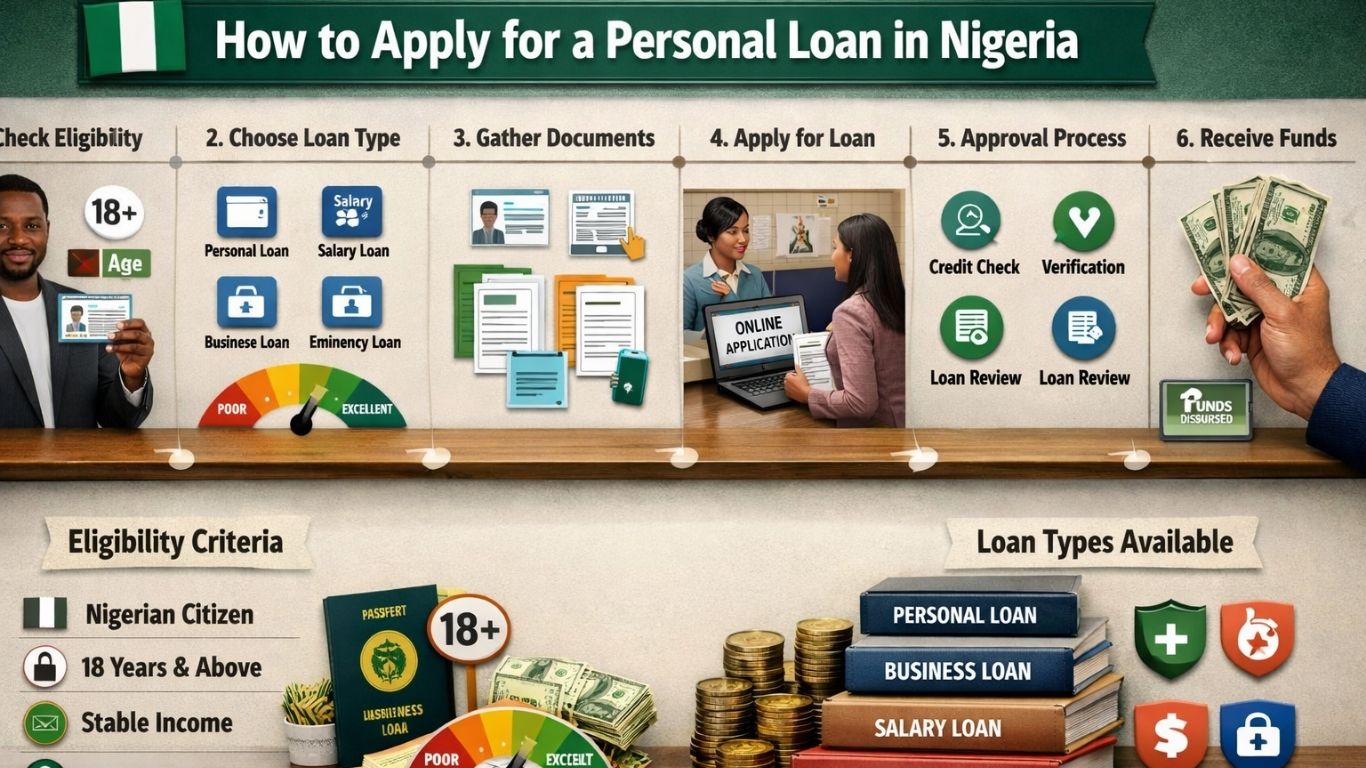
If you’re considering how to get a personal loan in Nigeria step by step, it’s important to understand the entire process from start to finish. Personal loans are a financial lifeline for many Nigerians, helping cover medical bills, tuition fees, emergencies, home improvements, or other personal expenses. With the rise of digital banking and mobile loan platforms, the process has become faster and more accessible. However, navigating this process can be overwhelming without the right information.
Now that you understand why personal loans are important, let’s look at how you can successfully apply for one in Nigeria. This guide will walk you through the steps involved in applying for a personal loan, explain the types of loans available, highlight eligibility criteria, and provide tips to ensure you have a smooth loan application experience. By the end of this article, you’ll be ready to apply for your loan confidently.
What Is a Personal Loan?
A personal loan is a type of unsecured loan that allows individuals to borrow money for personal purposes without the need for collateral. It is a flexible loan that can be used for a wide range of reasons, such as paying for medical expenses, funding a business, or even consolidating debt.
After understanding what a personal loan is, let’s consider which financial institutions provide them in Nigeria. In Nigeria, personal loans are generally offered by banks, microfinance institutions, and digital lending platforms. The terms and conditions vary depending on the lender, and the loan can be repaid in installments over a period that may range from months to years.
Step 1: Identify Why You Need the Loan
Before applying for any loan, it’s important to have a clear understanding of why you need it. Determining the exact purpose of the loan will guide you in assessing how much you need to borrow, as well as the repayment terms. This will also help you avoid borrowing more than necessary. Whether you need funds for medical emergencies, education, or home repairs, knowing the purpose will help in choosing the right lender and loan type.
Step 2: Understand the Different Types of Personal Loans Available
There are several types of personal loans in Nigeria, each suited for different needs. Understanding these options will help you choose the best one for your situation.
1. Unsecured Loans
Unsecured loans are the most common type of personal loan. These loans do not require collateral, making them easier to access. However, since they are riskier for lenders, they typically come with higher interest rates. Most online lending platforms offer unsecured loans, which can be approved quickly.
2. Secured Loans
A secured loan requires collateral, such as property or a vehicle, to back the loan. This type of loan typically has lower interest rates because the lender has some form of security. However, in case of non-repayment, the lender has the right to seize the collateral.
3. Salary-Based Loans
Salary-based loans are available for salaried individuals. These loans are generally easier to obtain because the repayment is automatically deducted from the borrower’s monthly salary. They are ideal for those with steady incomes.
4. Peer-to-Peer (P2P) Loans
Peer-to-peer loans allow individuals to borrow directly from other people, bypassing traditional financial institutions. These platforms offer more flexible terms and often have lower interest rates than banks, making them an attractive option for borrowers.
Step 3: Check Eligibility Criteria
Before applying for a personal loan, it’s important to ensure that you meet the eligibility requirements of the lender. Most lenders in Nigeria will evaluate the following factors:
- Age: You must be between 18 and 60 years old.
- Income: Lenders prefer borrowers with a stable income. This could be from your job, business, or other sources of income.
- Credit History: A good credit history increases your chances of approval. If you have a low credit score or have defaulted on previous loans, some lenders may be reluctant to approve your application.
- Bank Verification Number (BVN): This is used to verify your identity and creditworthiness.
Different lenders may have additional requirements, so it’s important to check the specifics with each one.
Step 4: Compare Loan Offers
Once you understand the eligibility requirements, it’s time to compare loan offers. You’ll find several banks, microfinance banks, and online platforms offering different interest rates, loan amounts, and repayment terms. Some factors to consider when comparing offers include:
- Interest Rates: Ensure you understand the interest rate on the loan. Some loans may offer lower rates but have hidden fees, while others may have higher rates but fewer additional charges.
- Loan Amount: Choose the loan amount that aligns with your needs. Avoid borrowing more than you need.
- Repayment Terms: Pay attention to how long you have to repay the loan and whether the terms are flexible enough for your financial situation.
- Approval Time: Some lenders approve loans instantly (especially online platforms), while others take a few days.
Step 5: Prepare Necessary Documents
When applying for a personal loan, you will need to provide several documents. These documents vary based on the lender and loan type, but generally include:
- A valid means of identification (National ID, Voter’s Card, or Driver’s License)
- Bank Verification Number (BVN)
- Proof of income (such as pay slips or bank statements)
- Proof of address (utility bills or lease agreements)
- Employment details (for salary-based loans)
Having these documents ready before applying can speed up the loan approval process.
Step 6: Apply for the Loan
Once you have prepared all the necessary documents, you can begin the application process. Depending on the lender, you can apply either online, through a mobile app, or in person at a bank or microfinance institution.
- Online platforms: Many online lending platforms allow you to apply via their website or mobile app. These platforms typically have faster processing times and can disburse loans within hours.
- Traditional banks: To apply at a bank, you may need to visit a branch in person to fill out an application and submit your documents.
Make sure that the information you provide is accurate and complete to avoid delays or rejection.
Step 7: Wait for Approval
After submitting your application, the lender will review your application and verify your documents. For online platforms, approval can happen within minutes to hours. For traditional banks, it may take several days. During the review process, the lender will assess your financial status, credit history, and the completeness of your documents.
If everything is in order, the lender will approve your loan and provide you with the terms, including the loan amount, interest rate, and repayment schedule.
Step 8: Receive the Loan
Once your loan is approved, the funds will be transferred to your bank account. Online lending platforms typically disburse funds quickly—sometimes within minutes or hours. For bank loans, the process might take a few days.
Be sure to check that the amount you receive matches the agreed-upon loan amount. Also, take note of the repayment schedule and the interest rate.
Step 9: Repay the Loan on Time
Repayment is crucial to maintaining your credit score and ensuring you are eligible for future loans. Many lenders will set up automatic deductions from your salary (for salary-based loans), while others will allow you to make monthly payments via bank transfer or mobile banking.
Make sure to adhere to the repayment schedule to avoid late fees, penalties, or damage to your credit rating.
Things to Consider Before Getting a Personal Loan
Before applying for a Personal Loan in Nigeria, consider the following factors:
- Interest Rates: Understand the total cost of the loan. A lower interest rate doesn’t always mean a better deal, as hidden charges may increase the overall cost.
- Repayment Period: Make sure the repayment schedule fits your financial capacity. Longer repayment periods may reduce monthly payments but increase the total interest paid.
- Hidden Charges: Always read the fine print to ensure that you are aware of all fees involved.
Frequently Asked Questions (FAQ)
1. Can foreigners get a personal loan in Nigeria?
Yes, foreigners can get a personal loan in Nigeria, provided they meet the lender’s requirements, which may include a valid visa, work permit, or residency status in Nigeria.
2. How long does it take to get a personal loan in Nigeria?
The time it takes to get a personal loan depends on the lender. Online loan platforms often provide approval within minutes to hours, while banks might take a few days for processing.
3. What happens if I miss a loan repayment?
Missing a loan repayment can result in additional fees, a higher interest rate, and damage to your credit score. Repeated missed payments may lead to the loan being marked as defaulted, which can impact your ability to get future loans.
4. What is the maximum amount I can borrow?
The maximum amount you can borrow depends on the lender and your eligibility. Most personal loans in Nigeria range from ₦50,000 to several million naira. However, higher amounts often require better credit and income verification.
5. Are online loan apps safe to use in Nigeria?
Yes, many online loan apps are safe and regulated. However, it’s important to choose reputable platforms with positive reviews and transparent terms. Always read the terms and conditions before applying.
Conclusion
Knowing how to get a personal loan in Nigeria step by step can help you navigate the process confidently and responsibly. By understanding the various loan types, eligibility criteria, and the steps involved in the application process, you will be better equipped to choose the right loan for your needs. Remember to borrow within your means and repay on time to maintain a healthy credit score. Personal loans can provide you with the funds you need, but only when managed properly.